
The second-generation Maxwell Asbo was introduced in 2000, continuing the name established by the 1993 car. It represents the third generation of Maxwell’s compact family when the earlier Ruckus is included. The body retained a small footprint but used a taller passenger compartment, sharper lamp detailing and more substantial protective trim.
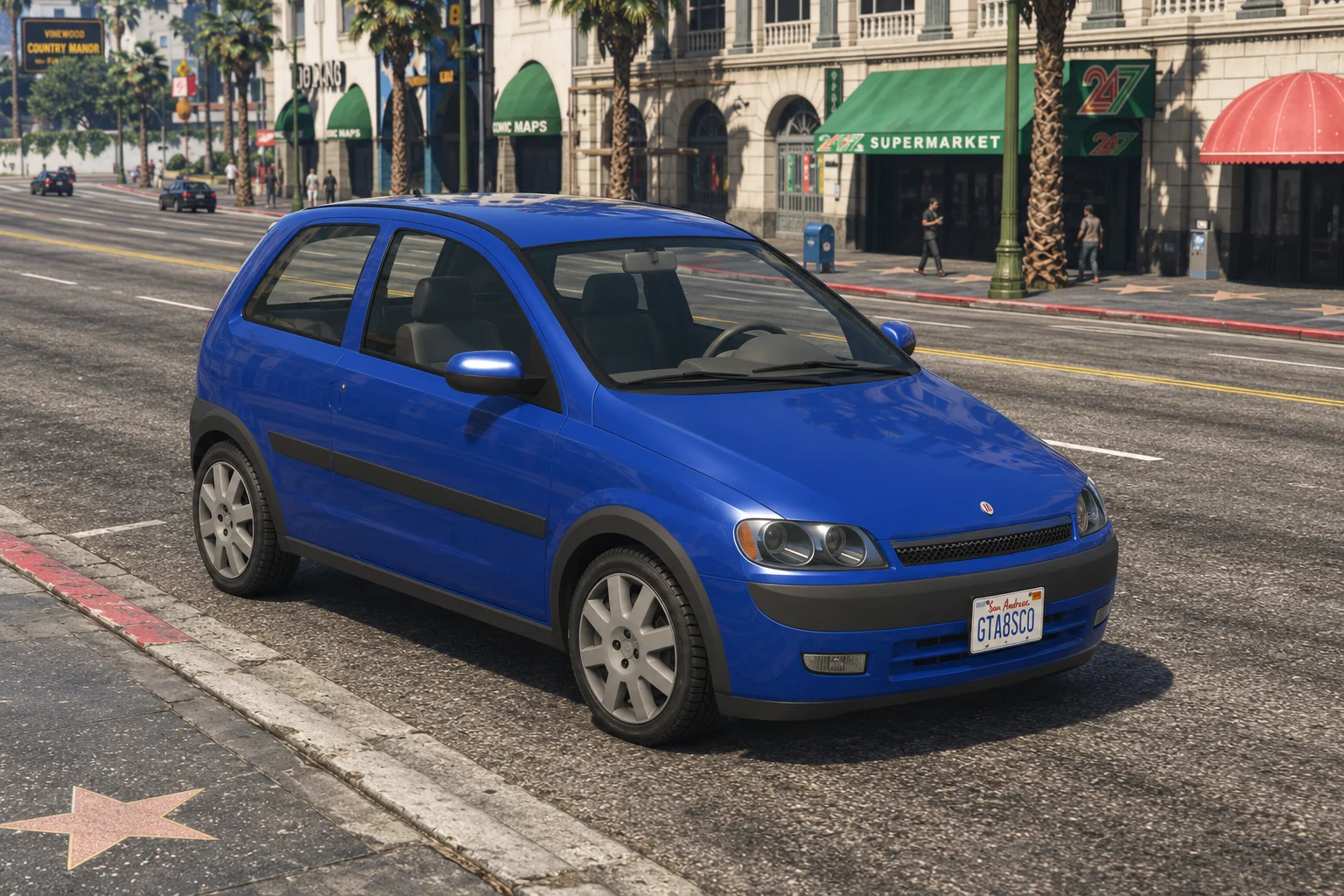
The range included a three-door hatchback and a separate high-roof commercial body. Work vans concentrated on practical equipment, while the Sport van combined the commercial shell with a lower stance and passenger-car styling details. This generation’s hatchback is the familiar Asbo seen on the streets of Los Santos.
Development and introduction
By the late 1990s, Maxwell needed a more mature small car without abandoning the buyers who expected the Asbo to be inexpensive to own. The replacement programme concentrated on cabin stiffness, better ventilation and more predictable behaviour on damaged road surfaces. The car remained front-wheel drive, with a transverse engine and a compact rear suspension arrangement.
The new hatchback appeared in 2000. Local assembly again centred on La Mesa, with commercial bodies following in 2001. The taller seating position and increased door opening made the new car easier to live with in dense traffic. Maxwell’s advertisements presented it as a car for daily life in Los Santos, even if its owners soon gave it a noisier reputation.
Design and equipment
The hatchback combines a rounded roof with more sharply defined front lighting. Paired circular lamp elements sit inside shaped housings, while a narrow grille and bonnet-mounted Maxwell emblem give the nose a distinct identity. Dark rubbing strips run along the doors and bumpers, and the rear uses tall lamp clusters beside the hatch.
Inside, the instrument panel and centre controls are more substantial than those of the earlier Asbo. Equipment varies by trim, but the basic arrangement remains practical: two front seats, a folding rear bench and a large luggage hatch. The ordinary hatchback should not be confused with the high-roof van, whose cargo shell and rear doors are entirely different.
Powertrain and chassis
The range retained small, transverse engines driving the front wheels. Petrol versions covered general passenger use, while the diesel supplied the torque and range preferred by commercial drivers. Five-speed manual gearboxes were common; a four-speed automatic was offered on selected passenger versions.
| Engine | Fuel | Output | Gearbox | Application |
|---|---|---|---|---|
| 1.2 M12-16 | Petrol | 75 hp | 5-speed manual | City hatchback |
| 1.4 M14-16 | Petrol | 90 hp | 5-speed manual / 4-speed automatic | Comfort hatchback / Work van |
| 1.6 M16-16 | Petrol | 110 hp | 5-speed manual | Sport hatchback / Sport van |
| 1.7 TD17 | Turbo-diesel | 75 hp | 5-speed manual | Work van |
Compared with its predecessor, the Asbo feels more settled on a fast road but still responds best to smooth inputs. A loaded high-roof van has a different balance from the hatchback: the extra body height and cargo position matter more than cosmetic Sport equipment. Engine figures here describe the fictional model range, not measured game handling values.
Commercial derivatives
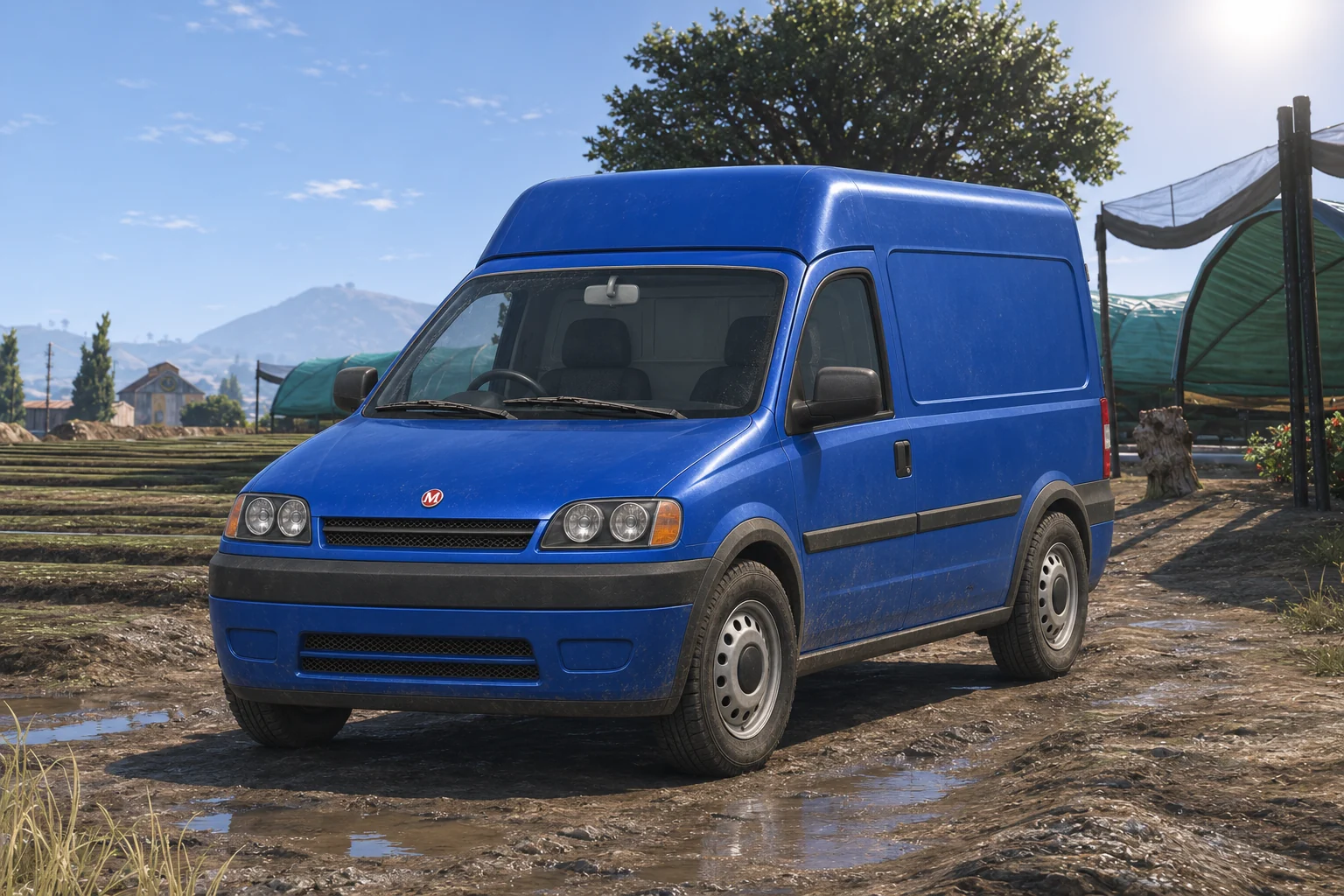
The high-roof Work van shared the Asbo’s front styling but used a long, solid-sided cargo compartment and twin rear doors. Steel wheels, unpainted rubbing strips, a bulkhead and a washable load floor suited repeated daily use. It was supplied to independent delivery drivers, mobile repair businesses and small workshops across Los Santos and Blaine County.
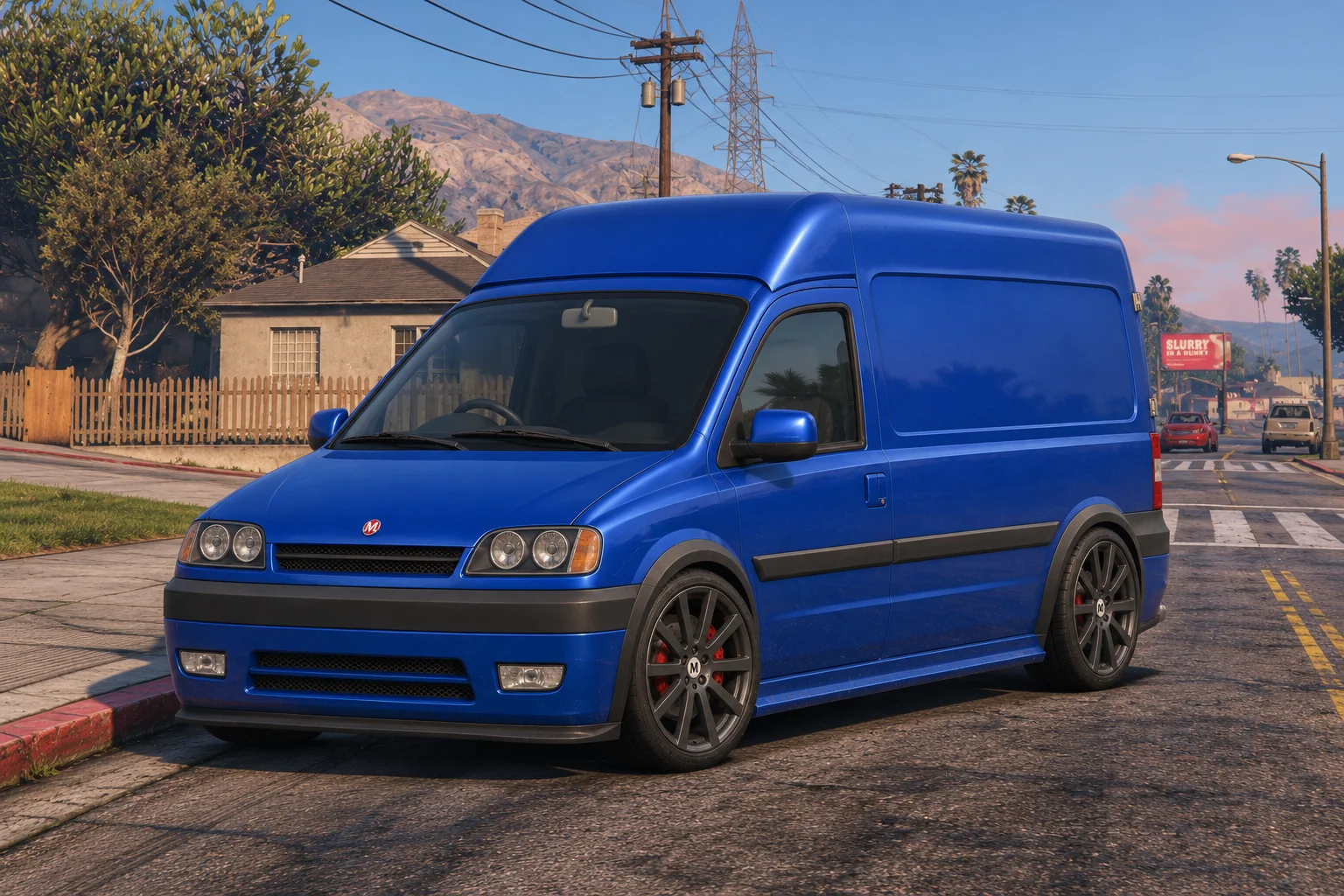
A better-equipped mid-range version added wheel covers or alloys and more cabin equipment without changing the basic cargo body. The Sport van went further, adding fog lamps, body-coloured details, larger dark wheels and a lower suspension setting. Its tall rear body remained recognisably commercial; it was not a passenger people carrier.
The van outlived the original hatchback production run because business buyers preferred continuity of parts and body dimensions. Production continued until 2010 in this model history. Neither the Work nor Sport body should be treated as a separate generation of Asbo.
Sport van and later equipment
The Sport van was introduced in 2003 as an attempt to bring the Asbo’s enthusiast appeal into the commercial range. Its 1.6 petrol engine, firmer suspension and front fog lamps were paired with the same enclosed load compartment used by the Work model. Dark multi-spoke wheels and red brake detailing became its most recognisable features.
Later Work vans received incremental cabin and electrical revisions rather than a wholesale restyle. Fleet operators could continue using established racks and load-area fittings. The Sport appealed to owner-drivers who wanted a vehicle that could carry equipment during the week and still look at home at an evening meet.
Owners, tuning and legacy
The Asbo became a familiar starting point for inexpensive personalisation. Wheels, exhausts, bumper changes and contrasting paint were common sights at workshops around Los Santos. Its appeal lay in accessibility: owners could gradually alter an ordinary compact rather than begin with an expensive performance car.
Well-used hatchbacks continued circulating through the second-hand market, while commercial examples remained on local routes. The same family could therefore appear outside a small shop in the morning and at a car meet that evening. Within Maxwell’s compact lineage, this Asbo is the link between the original Ruckus’s practical brief and the more expressive small-car culture of Los Santos.
Gallery
Select an image to view the full illustration.
Editorial notes
This is DSG Network’s fictional Maxwell family history. The Ruckus, the earlier Asbo, the production chronology, factory history, engine families and commercial derivatives are original additions to this universe. The existing Asbo hatchback provides the established starting point; the extended history is not presented as an official vehicle catalogue.
Vehicle illustrations were created from supplied design references and GTA environment images. They are staged illustrations, not evidence of an official release or an unmodified gameplay capture. The articles cover only the three generations in this collection.
Canon reference: Rockstar Games — The Diamond Casino Heist, which introduced the Maxwell Asbo. No fictional brochure, road test or manufacturer document is cited as a real source.