
The first Maxwell Asbo was introduced in 1993 as the replacement for the Ruckus. It kept the compact dimensions and front-wheel-drive layout of its predecessor but adopted a rounded body, a taller cabin and improved everyday refinement. The Asbo name subsequently became Maxwell’s best-known small-car badge.
A high-roof commercial derivative expanded the family beyond the earlier hatchback-based Panel Van. Passenger production continued until 2000; the commercial version remained available into 2001 while the next Asbo van entered service. A 1997 facelift provides the principal visual division within this generation.
Development and launch
Work on the Ruckus replacement began in 1989. Maxwell’s dealers wanted more cabin space and less engine noise, but the company also needed to keep the car affordable for the customers who had made the earlier model successful. A taller roof and more upright seating position improved accommodation without moving the Asbo into the larger-car market.
The 1993 launch introduced a new name as well as a new body. The La Mesa works was refitted for the rounded shell, while the service network retained familiar routine maintenance procedures. In Los Santos, the Asbo quickly became an ordinary sight outside apartments, colleges and repair shops. Its modest purchase price mattered more to most buyers than the advertising’s suggestion of youthful rebellion.
Body and interior
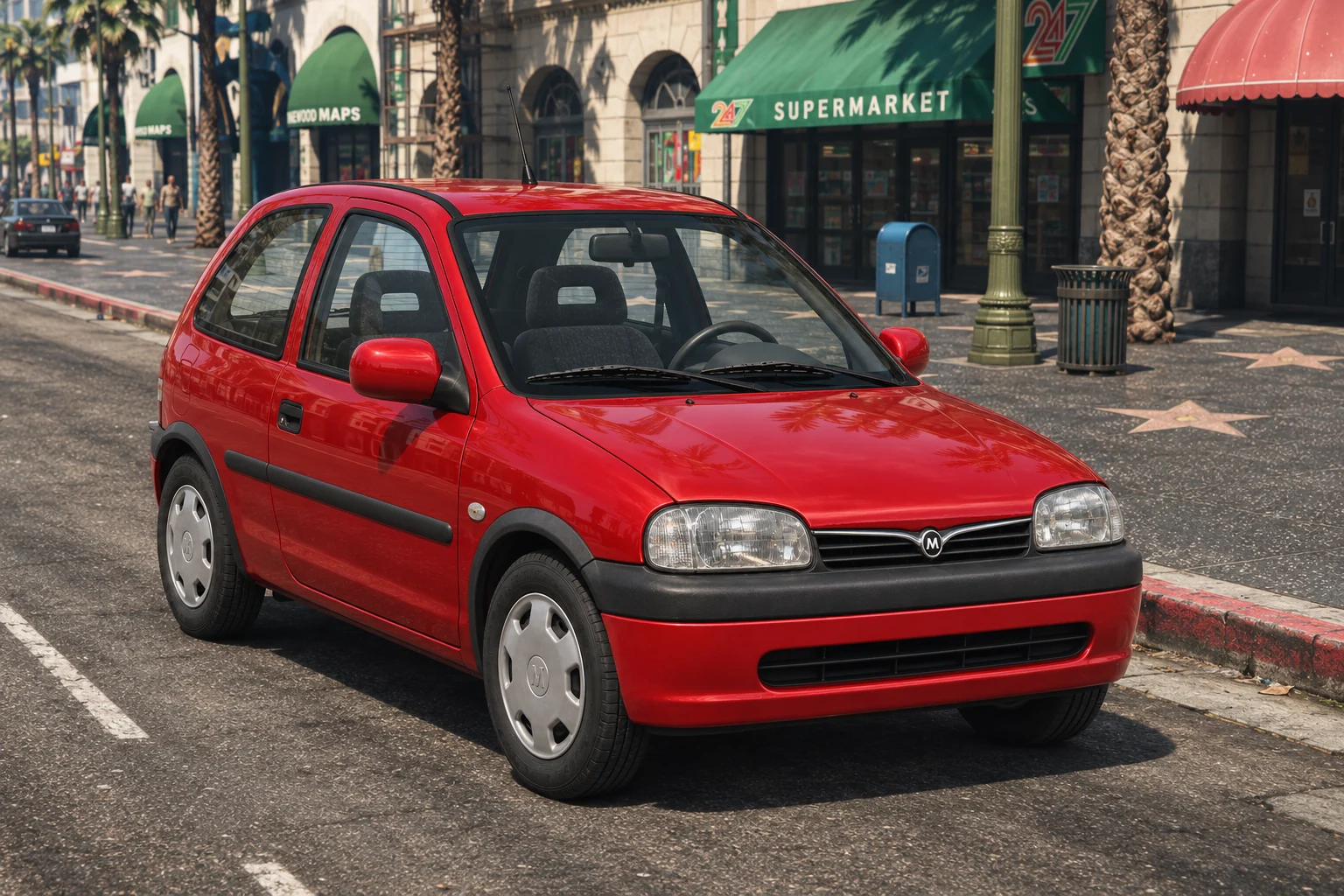
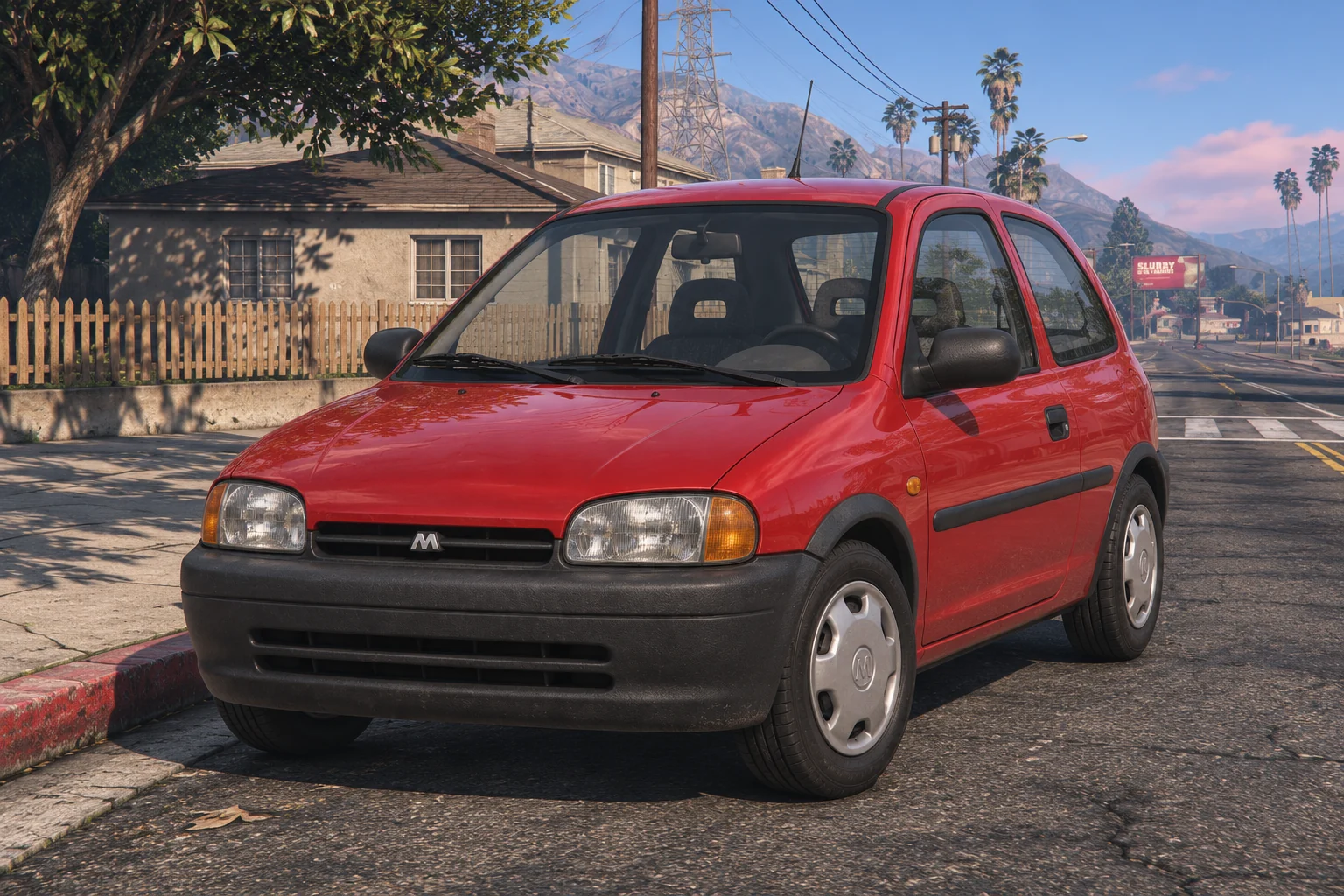
Rounded headlamps, a short sloping bonnet and softly curved wheel arches distinguish the Asbo from the angular Ruckus. Early examples have a narrow dark grille, amber front indicators and broad unpainted bumpers. The three-door hatchback has a compact rear overhang and a large single side window behind each front door.
The cabin gained a more substantial dashboard, deeper door pockets and better separation between the engine compartment and passenger space. Cloth upholstery remained standard on everyday versions. The rear bench folded down for bulky luggage, although the hatchback’s main purpose remained passenger transport rather than commercial load carrying.
1997 facelift
The 1997 update replaced the plain grille with a brighter Maxwell surround and revised the front lamp lenses. More body-coloured bumper material and revised wheel trims made the car look better finished, while the black protective strips remained. The hatchback’s basic roofline, doors and rear side-window shape were carried over.
Changes beneath the skin concentrated on quieter operation, revised seat padding and a broader spread of equipment. The facelift did not create a new generation. Early black-bumper cars and later partly colour-coded cars belong to the same family, and many routine service parts remained interchangeable.
Engines and driving characteristics
Four-cylinder petrol engines served most passenger buyers. The smaller units emphasised economy, while the 1.6 was paired with firmer suspension in the Sport. The diesel was the preferred commercial choice, using conservative tuning and short gearing to move a working load rather than chase a headline top speed.
| Engine | Fuel | Output | Gearbox | Application |
|---|---|---|---|---|
| 1.2 M12i | Petrol | 60 hp | 5-speed manual | City / entry hatchback |
| 1.4 M14i | Petrol | 82 hp | 5-speed manual / 4-speed automatic | Comfort hatchback / van |
| 1.6 M16S | Petrol | 106 hp | 5-speed manual | Sport hatchback |
| 1.7 D17 | Diesel | 60 hp | 5-speed manual | Commercial van |
Light steering and a small turning circle suited the car to busy Los Santos streets. The Sport traded some ride comfort for more immediate responses. Even in that form, the Asbo remained a small everyday hatchback rather than a rival to the expensive performance cars displayed in Rockford Hills.
Asbo high-roof van
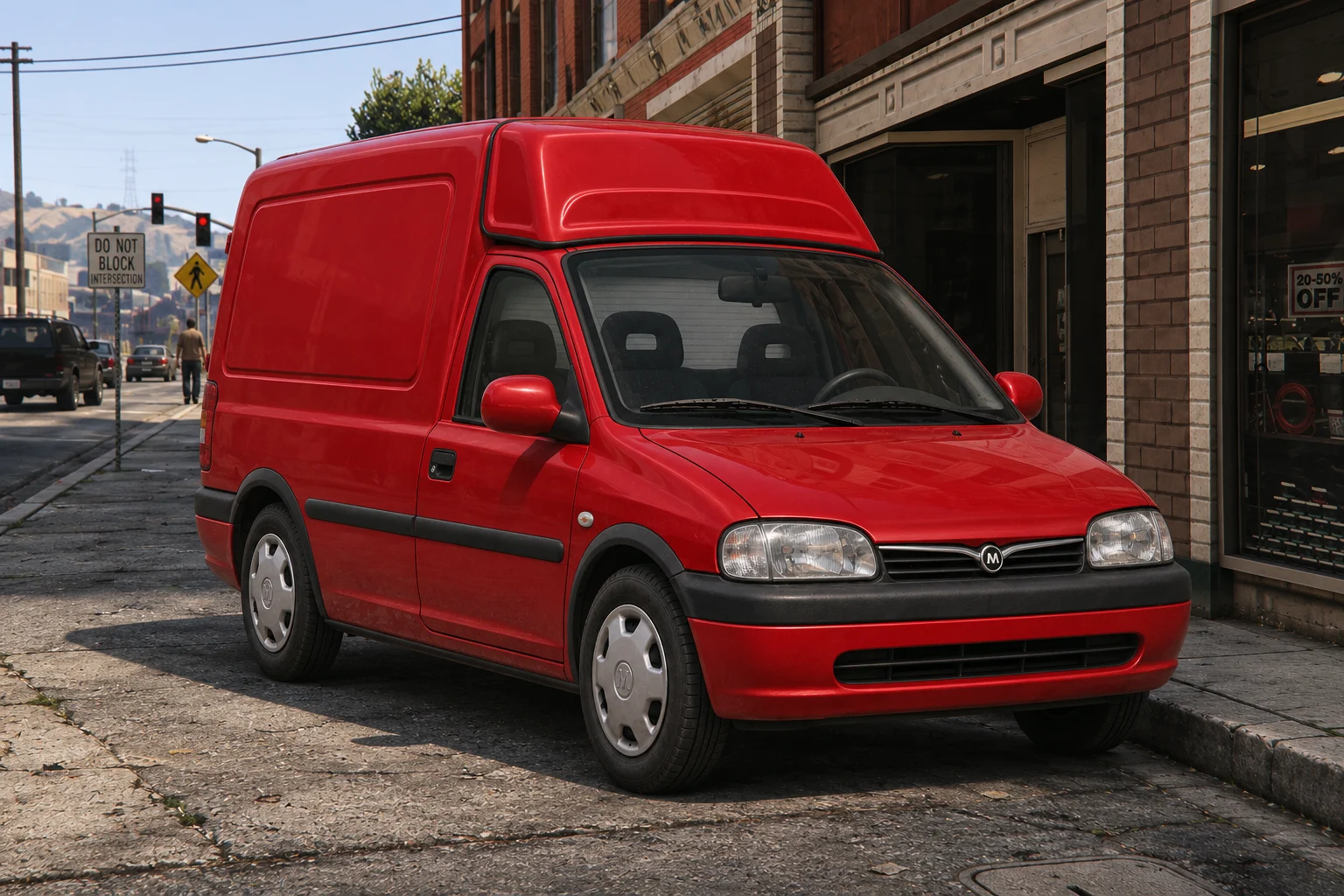
Introduced in 1994, the commercial Asbo used the passenger car’s nose and front doors but added a taller, longer cargo body. The roof rose above the cab, and the rear became a squared-off load box with twin outward-opening doors. Solid side panels and a flat cargo floor separated it clearly from the Ruckus Panel Van.
Maxwell offered a short-wheelbase delivery model and a long-wheelbase body for businesses needing more floor length. The longer version extended the space between the cab and rear axle; it was not simply a longer rear bumper. Both used the same rounded front family styling. Later production adopted the facelift grille and lighting details.
The van became popular with independent couriers and workshop suppliers operating around La Mesa. Its combination of a small-car cab and usable cargo height gave it an advantage on routes where a full-sized van was cumbersome. A taller body also made load restraint important, particularly when drivers took the winding roads north into Blaine County.
Replacement and enthusiast use
The next Asbo replaced the hatchback in 2000. Commercial production overlapped briefly so Maxwell could continue supplying businesses while the new van was introduced. Used early cars then passed into the hands of younger drivers, who often fitted larger wheels, louder exhausts and parts from scrapped Sport models.
The first Asbo consequently developed two identities: an economical daily car and a low-cost project. Surviving original examples show how restrained the standard vehicle was before years of owner modifications. High-roof vans are rarer in preserved condition because most spent their lives carrying equipment rather than attending car meets.
Gallery
Select an image to view the full illustration.
Editorial notes
This is DSG Network’s fictional Maxwell family history. The Ruckus, the earlier Asbo, the production chronology, factory history, engine families and commercial derivatives are original additions to this universe. The existing Asbo hatchback provides the established starting point; the extended history is not presented as an official vehicle catalogue.
Vehicle illustrations were created from supplied design references and GTA environment images. They are staged illustrations, not evidence of an official release or an unmodified gameplay capture. The articles cover only the three generations in this collection.
Canon reference: Rockstar Games — The Diamond Casino Heist, which introduced the Maxwell Asbo. No fictional brochure, road test or manufacturer document is cited as a real source.